Wednesday, January 26, 2011

AFFLATUS QUINTET

Sts. Simon and Jude Church
January 25


Playing with a touch of divine inspiration. 

Who could resist an opportunity to see two wind quintets on the same bill? The well-regarded Afflatus Quintet was joined by the younger Belfiato Quintet last night for a program of mostly French composers, a refreshing change from Prague’s usual chamber music fare. They nearly filled Sts. Simon and Jude Church, and by the end of the performance, it was clear why.

The first half of the concert belonged to the Afflatus Quintet, a group of very accomplished players. Flutist Roman Novotný, oboist Jana Brožková and bassoonist Ondřej Roskovec are all members of the Czech Philharmonic. Clarinet player Vojtěch Nýdl is a member of the Prague Philharmonia, and Radek Baborák, an artist-in-residence with the Prague Symphony Orchestra this season, normally plays French horn with the Berlin Philharmonic. They warmed up with an opening Haydn divertimento, lending a light musical exercise some weight with lustrous tones and a steady, restrained tempo.

The second piece, Darius Milhaud’s Le Chiminée du Roi René, is a suite from a film score written for Raymond Bernard’s Cavalcade d’amour, released in 1940. A standard in the wind quintet repertoire, it poses a good workout, with shifting melodies, nimble turns and quick, short runs. The group handled them with aplomb, showing the style that characterizes much of their playing – thoughtful but spirited, a masterful blend of intelligence and feeling. They took that sound up a notch for Ferenc Farkas’ Early Hungarian Dances of the 17th Century, a reworking of some anonymous period dance melodies. The quintet gave them a crisp, lively edge, earning an enthusiastic round of applause.
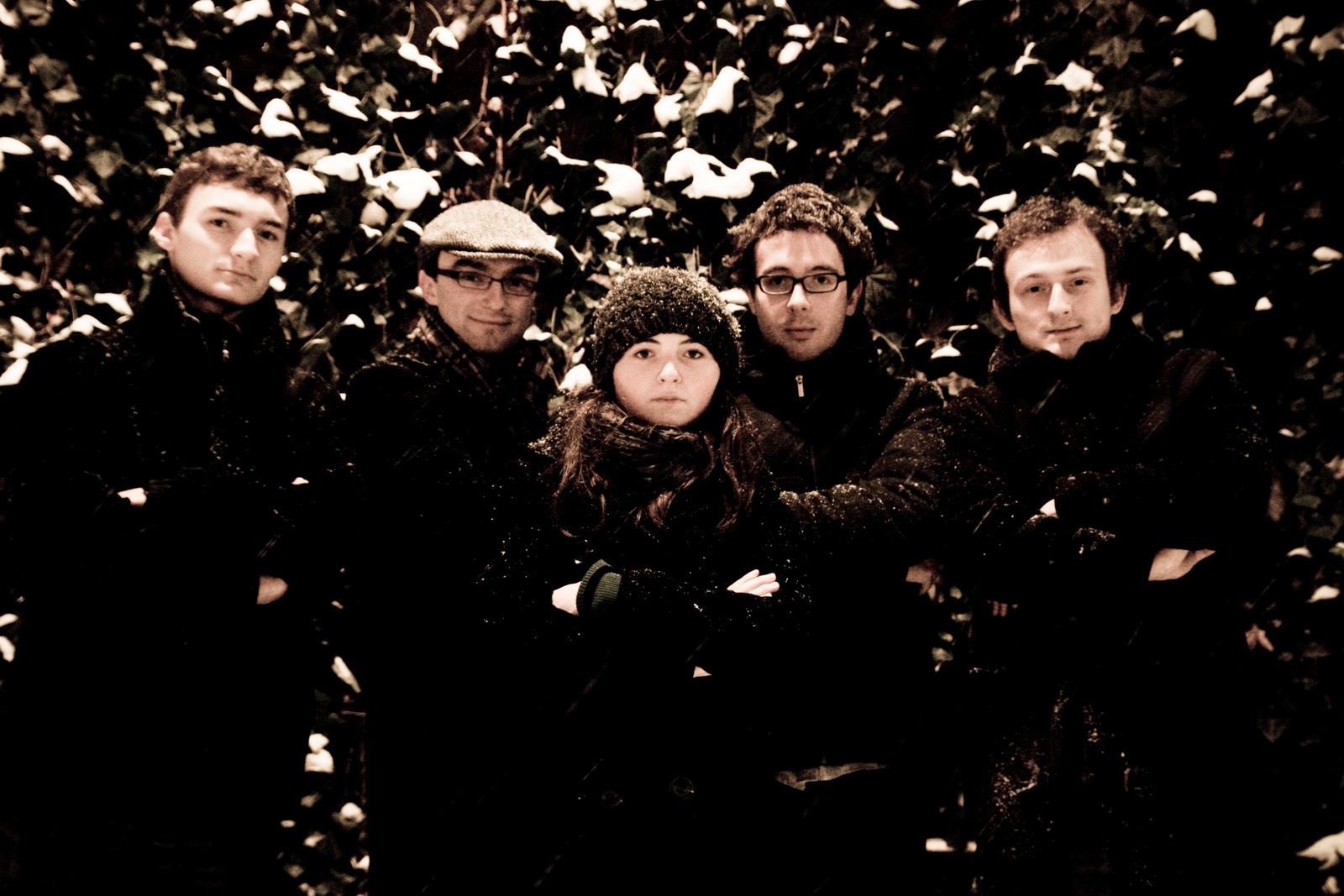
The next generation of wind wizards.
The second half of the concert opened with nine musicians onstage – the Afflatus five, and oboist Martin Daněk, clarinetist Jiří Javůrek, bassoonist Ondřej Šindelář and French horn player Kateřina Javůrková of the Belfiato Quintet, a group of recent graduates and protégés of Roskovec. The larger ensemble’s sound was fuller and deeper, but no less tight for Gounod’s Petite symphonie, a piece brimming with bright colors and inventive tones. The nontet gave it a vibrant glow, taking expert advantage of the layers of sound, and playing with warmth without sacrificing any precision.

Flutist Oto Reiprich made it 10 when he joined the group for Jean Françaix’s Les Malheurs de Sophie, a brilliant evocation of a child’s world. The piece was immediately engaging and the energy of the performance was infectious, playful and fast-paced. The combined ensembles proved adept at handling modern phrasing and chords, and Novotný finished with a flashy bit of flute work that drew cheers.

Compared to much of the recent classical music on Prague stages, in particular the gargantuan Mahler symphonies, this concert was like brain candy, small bites of sweeter and simpler fare. But there is a purity about wind ensemble music, especially played at this level, that is invigorating. The sound has the clarity of a fresh mountain stream, and as it builds in complexity, it serves as a reminder of how much can be accomplished with just a few instruments.

Afflatus” is a Latin term for inspiration, in the poetic sense of something that is blown into one by a divine wind. If last night’s concert wasn’t quite divine, it certainly had heavenly moments. And if the second half was any indication, it was a heartening look at a great musical tradition being passed down from one generation to the next.


Sunday, January 23, 2011

BRYN TERFEL

Obecní dům
January 20


Don't be fooled by the smile ― this man is bad.
 

Were his voice not so amazingly good, it would be tempting to call Bryn Terfel an actor who can sing. Playing his new “bad boy” image to the hilt, the Welsh bass-baritone mugged, leered, bellowed and charmed his way through his Thursday night concert in Prague, putting on a show that titillated and delighted a packed house of enthusiastic fans.

Terfel set the tone with the opening number, Dr. Dulcamara’s conniving “Udite, udite o rustici” aria from Donizetti’s L’elisir d’amore. As he was preparing to sing, Terfel slyly pulled a bottle of Pilsner Urquell from his sleeve, then proceeded to wave it around and drink it down in three hefty, man-sized swigs over the course of the number. It was an amusing routine that ended with him stumbling around the stage glassy-eyed, missing an attempt at a handshake with the concertmaster. Pure corn, and the audience ate it up.

How bad could Bryn get? He brandished a blade during Weill & Brecht’s “Ballad of Mack the Knife,” and toked on an imaginary joint as Sportin’ Life singing Gershwin’s “It Ain’t Necessarily So.” Just in case anyone missed the point, he announced that “Many of my characters tonight are really bad, misfits of the opera world,” before growling and belching an animated “Ehi, paggio – L’onore! Ladri!” from Verdi’s Falstaff. That was a masterpiece of comic timing, with conductor and longtime performing partner Gareth Jones dropping in the orchestral flourishes and exclamation points at exactly the right moments. These guys would kill in Vegas.

Amid all the clowning, it was easy to overlook Terfel’s voice, which is as big and strong as any that have filled Smetana Hall. What’s more impressive is his excellent diction, solid technique and masterful vocal control, all world-class. There was some complaint from critics that Terfel didn’t have the commanding voice required for Wotan, the role he played in the Met’s recent production of Das Rheingold. That was hard to judge from this performance, which did not require much stretching – you could count on one hand the number of high notes Terfel hit. But he is above all an intelligent singer, and as a marketing effort for his new release, Bad Boys, this concert was an agreeable exercise in light lifting.

Getting in character.
Still, it had two distinct shadings. The first half, mostly opera selections from Donizetti, Wagner and Verdi, had weight and substance and the benefit of Terfel singing roles that he has played onstage. It was polished, witty and at times even compelling. By comparison, the second half, which featured Broadway staples like “Some Enchanted Evening” and “The Impossible Dream,” seemed flat, like someone had let the air out. Terfel has the pipes and affection for that material – he has recorded entire albums of Lerner & Loewe and Rodgers & Hammerstein. But it lacked impact, with Terfel sounding more like a slumming opera singer than a pop star.

This mattered not a whit to the adoring audience, which groaned audibly when he looked at his watch and announced the final song, then greeted his encores with yells of approval. For the first, Don Giovanni’s “Deh Vieni alla finestra,” Terfel went into the audience and got on one knee to serenade an elderly fan. The second was an unabashedly sentimental nod to his homeland, “My Little Welsh Home,” which he introduced by saying, “I’ve been a bad boy all night. Now I want to be good.”

The music was uniformly strong all evening, thanks to Gareth Jones, who drew a bright, seamless sound from the Prague Radio Symphony Orchestra. Jones is a smart, energetic conductor who puts a lot of pop in the material, a style that worked very well on Saint-Saëns’ Danse Macabre. But the real surprise of the evening was Gershwin’s Rhapsody in Blue, which was strikingly good, considering that it was being played by a Czech orchestra, led by a British conductor, with a Czech soloist – Pavel Kašpar on piano. Kašpar plays Haydn and Beethoven as well as anyone, but who knew that he could swing?

As for Terfel, he packages his prodigious talent in a regular-guy vibe that has a very strong appeal. Somehow, the nod and wink that he has for everyone reach all the way to the back rows of the hall, and by the end of the concert, it’s easy to imagine meeting him at the pub to bang back a couple tasty Pilsner Urquells.