La Fabrika
November 4, 11 & 16
 |
| All eyes are on electronic impresario Miguel Azguime. |
Organizers are usually happy to see capacity crowds at their concerts. So it was surprising to talk to Petr Bakla, the chief dramaturgist of this year’s Contempuls festival, after the final performance and hear him confess, “I have mixed feelings about this.”
“This” was the largest audience the festival has ever drawn, chiefly on the strength of star cellist Jiří Bárta, who also packs classical halls like the Rudolfinum. It’s axiomatic in modern music circles that if something is popular, it must not be good – difficult music is for aficionados, who tend to show up in small numbers. Anything else is considered a sellout.
But Bárta proved as adept with contemporary works as he is with the classical canon, staging a fine homage to one of his teachers, Czech composer Marek Kopelent. And Bakla should feel good about his programming, which drew consistently strong crowds on all three nights of the festival. It set the bar high in the first concert, delivered a theatrical jolt in the second, and finished with a rousing electric finale.
American pianist and composer Eric Wubbels opened the festival with nine selections from Voices and Piano. The piece is an ongoing work by composer Peter Ablinger, who uses spectral analysis to create piano accompaniment for vocal excerpts of famous people (Jean-Paul Sartre, Hanna Schygulla and Cecil Taylor, among others in this performance), unearthing nuances and cadences that would ordinarily go unnoticed. As played by Wubbels, one plus one equaled more than two; pinpoint piano work created a third entity, a revealing synthesis of music and ideas.
 |
| A workout for Oka and her colleagues. |
Opening night also featured Germany’s ensemble recherche, which played a new work (commissioned for the festival) by Czech composer Pavel Zemek, and Helmut Lachenmann’s Allegro sostenuto. Zemek’s piece worked a single phrase long and hard, with unsatisfying results. By contrast, the Lachenmann piece, which is 23 years old, still sounds revolutionary in its rearrangement of conventional musical ideas. It’s also extremely demanding on the players, who are required to produce a range of honks, squeals, taps and scratches, and jump up for occasional gymnastics. Pianist Jean-Pierre Collot, cellist Åsa Åkerberg and clarinetist Shizuyo Oka were superb, weaving abstract lines and crashing chords into a cohesive, compelling work that would fall apart in lesser hands. It was an outrageously good performance that had the audience whooping with approval afterward.
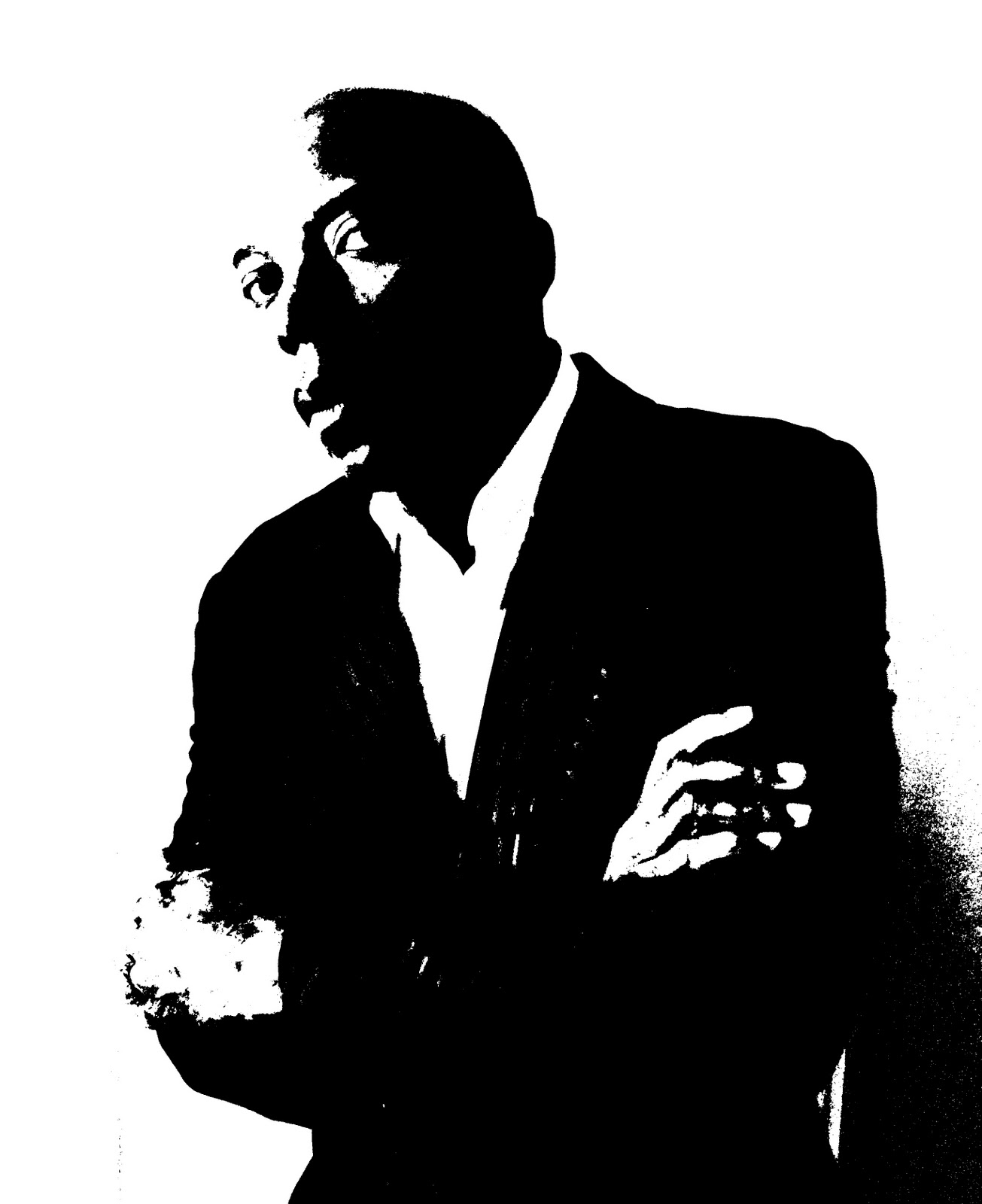
The second night of the festival was devoted entirely to Itinérario do Sal/Cesta soli, a vocal and visual effects piece by Portugese actor, composer and poet Miguel Azguime. Billed as an electronic chamber opera, the one-man show features Azguime serving up a steady stream of inventive nonsense babble supplemented by electronic images and sound effects. At first the piece is riveting, with Azguime’s face appearing in bizarre stylizations on the screens behind him as he seems to be spouting the pain, confusion and frustration of the modern world – a noisy and aggressive place filled with unhealthy, paranoid people. But as the effects start to repeat, their impact fades, and the wordplay projections in the final scenes seem anticlimactic.
Still, Azguime put on an inspired performance, as if the distraught character in Edvard Munch’s The Scream had come to life. And for this critic, one of the enduring images of the festival will be Azguime with his head in a bucket, a surreal figure babbling into a tiny camera that projected a giant solarized image of his earnest, frantic face.
Bárta opened the final night of the festival with five pieces by Kopelent and some of his more illustrious alumni, a group that includes Martin Smolka. Some were solo works, others for a chamber group; all were disarmingly difficult. It was obvious that Bárta had put a lot of work into preparing the pieces – his playing was for the most part at a virtuoso level. Even the effects, which included a solid-body electric cello that sounded more like an electric guitar on Gavin Bryars’ After the Requiem, came off with seriousness and clarity. Bárta may be an established star, but he’s certainly willing to extend his range and take some risks.
The French string quartet Quatuor Diotima plugged in their instruments for the finale: Miroslav Srnka’s Engrams and Steve Reich’s Different Trains. Srnka, arguably the Czech Republic’s best-known contemporary composer, writes incredibly complex pieces, and the quartet showed fine control and mastery of the material. There’s also some humor in Engrams, which came through nicely in their performance. Reich’s piece is literally a ride on the fast track, requiring the musicians to play along with brisk taped musical segments built on vocal snippets like “From Chicago to New York.” It is not the most challenging piece in the repertoire, but it is a great deal of fun to hear. And it was impressive to see the quartet make a seamless transition from a complicated Czech work for strings to American electronica, playing both with skillful aplomb.
Would Contempuls have been more successful if the audiences had stayed away in droves? By some standards. But the combination of outstanding programming and performances, and the crowds the festival drew this year, suggest that Bakla and his colleagues are doing something right. Most importantly, they are giving Prague a modern music festival in tune with contemporary currents, bringing fresh sounds and ideas to a city that could use a lot more of them.
More photos of this year’s festival are posted at: http://www.contempuls.cz/main.php?jazyk=EN
Photos by Karel Šuster